
Manufacturing ERP Software: What UK Manufacturers Should Look For
Navitrends UK · 5 October 2026 · Updated 08/10/2026
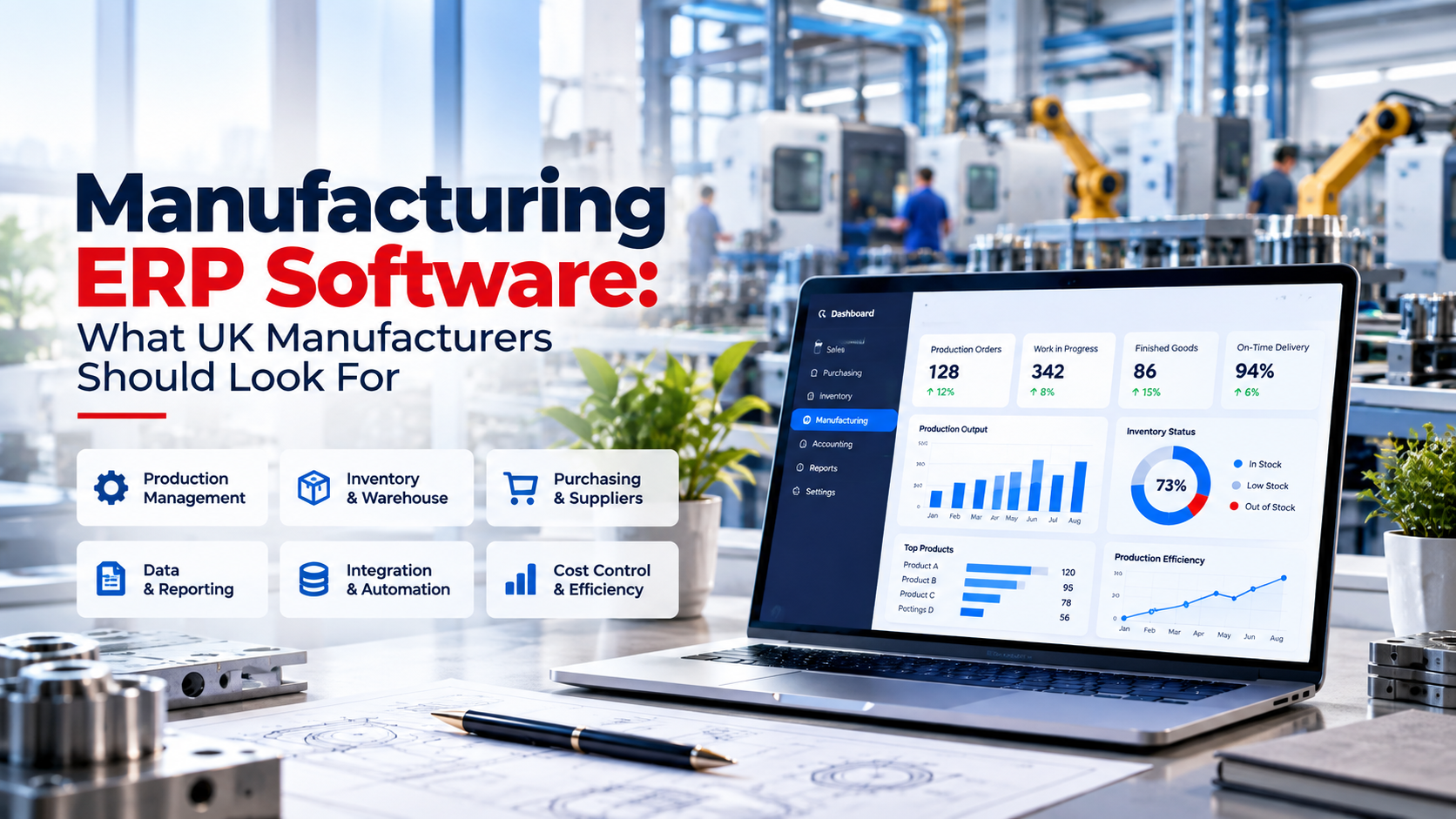
Manufacturing businesses have different ERP requirements from many service-based organisations. Production, inventory, purchasing, sales and finance are closely connected, and a problem in one area can quickly affect the others.
Manufacturing ERP software can help bring these activities into a more connected environment, but choosing a platform should not begin with a long feature checklist.
The starting point should be understanding how the business actually operates: how materials are purchased, how stock moves, how production is planned, how products are manufactured and how operational information reaches management.
This guide explores what UK manufacturers should consider when evaluating manufacturing ERP software.
What Is Manufacturing ERP Software?
Manufacturing ERP software is an Enterprise Resource Planning system designed to connect business management processes with manufacturing operations.
Depending on the organisation and platform, this can include purchasing, inventory, production, sales, finance, reporting and other operational processes.
Instead of managing these activities through disconnected applications and spreadsheets, ERP can provide a shared environment where information moves between different parts of the business.
However, not every manufacturer has the same requirements. A business producing standard products in high volumes may need a very different setup from a company operating engineer-to-order or project-based manufacturing.
Why Do Manufacturers Consider ERP Software?
Manufacturing operations can become difficult to manage when information is fragmented across departments.
Production teams may use spreadsheets, purchasing may work from separate supplier records, warehouse information may exist in another system and management reporting may require manual consolidation.
As operations grow, these disconnected processes can create duplicated data, delays and limited visibility.
Manufacturing ERP software can provide a foundation for connecting these processes, but the value depends on how well the implementation reflects the organisation's actual workflows.
What Should UK Manufacturers Look For in an ERP?
Rather than selecting software based only on the number of available features, manufacturers should evaluate how well an ERP can support their core operational processes.
Several areas deserve particular attention.
Production Management
The ERP should reflect how production is actually organised.
Manufacturers should consider how products, materials, production activities and work processes need to be represented within the system.
The required level of complexity will depend on the manufacturing model, product structure and operational environment.
The important question is not simply whether the software has a manufacturing module, but whether it can support the way the organisation produces its products.
Inventory and Warehouse Management
Inventory information is closely connected to manufacturing.
Businesses need visibility into materials, components, finished products and stock movements across relevant locations.
The ERP should support the organisation's inventory processes while allowing production, purchasing and sales teams to work with consistent information.
For businesses operating multiple warehouses or storage locations, the structure of inventory management becomes particularly important.
Purchasing and Supplier Management
Production depends on materials being available when required.
Purchasing processes should therefore connect naturally with inventory and production requirements.
Manufacturers should consider how supplier information, purchase orders, material requirements and incoming goods will be managed.
Connecting these activities can reduce the need to manually transfer information between purchasing, warehouse and production teams.
Sales and Order Management
Customer orders can have a direct impact on manufacturing and inventory requirements.
An ERP can help connect sales information with the operational processes required to fulfil those orders.
The exact workflow depends on whether products are manufactured to stock, manufactured to order or produced through another operating model.
Understanding this relationship is important when designing the ERP environment.
Finance and Operational Data
Manufacturing activities ultimately affect financial information.
Purchasing, inventory, sales and other operational transactions can contribute to the financial view of the organisation.
A connected ERP environment can reduce the need to manually consolidate information from multiple systems.
However, businesses should carefully define which information belongs in the ERP and how financial and operational processes should interact.
Reporting and Visibility
Management teams need reliable information to understand what is happening across operations.
Manufacturing ERP software can provide a common source of operational data for reporting, but simply having more dashboards does not automatically create better visibility.
Businesses should first determine which information supports real decisions and then design reporting around those requirements.
Integration With Existing Manufacturing Systems
Implementing an ERP does not necessarily mean replacing every existing application.
Manufacturers may already use specialised systems for production, warehouse operations, e-commerce, engineering or other activities.
If these systems continue to provide value, integration may be more appropriate than replacement.
APIs and other integration methods can allow information to move between the ERP and existing applications.
The implementation should clearly define which system owns each type of information and how data should move between them.
Manufacturing ERP and Workflow Automation
ERP implementation can also create opportunities to automate repetitive operational processes.
For example, information may need to move between applications, documents may need to trigger business processes or teams may currently perform repetitive data-entry activities.
Automation should not be introduced simply because a task can be automated.
The first step is understanding the process, identifying unnecessary activities and determining where automation can create practical operational value.
Data Migration for Manufacturing ERP
Existing manufacturing data may be spread across spreadsheets, databases and legacy applications.
Moving this information into a new ERP requires more than simply importing files.
Businesses should identify which data needs to be retained, remove unnecessary duplication and determine how existing information maps to the new ERP structure.
Products, suppliers, customers, inventory information and other operational records may all require preparation.
Data quality should therefore be addressed before go-live rather than treated as a final technical task.
Configuration vs Customisation
Modern ERP platforms can often be configured to support a wide range of manufacturing processes.
Where possible, businesses should first determine whether standard functionality and configuration can satisfy their requirements.
Custom development can be appropriate when a genuine operational requirement cannot be addressed effectively through configuration.
However, unnecessary customisation can make an ERP environment more complex to maintain.
The objective should be to customise where it creates real business value rather than recreating every existing process exactly as it works today.
Odoo and ERPNext for Manufacturing Businesses
Open-source ERP platforms such as Odoo and ERPNext are among the options manufacturers may evaluate when looking for a flexible ERP environment.
Both platforms can form part of a broader business system covering areas such as inventory, purchasing, sales and manufacturing operations.
The right choice depends on the organisation's requirements, existing systems, processes and expected level of configuration, customisation and integration.
The decision should therefore follow process analysis rather than beginning with a preference for a particular ERP product.
How to Choose Manufacturing ERP Software
The selection process should begin with the business rather than the software.
Manufacturers should document their important processes, identify current operational problems and determine which requirements are genuinely essential.
They should also consider existing systems, integration requirements, data migration, user needs and future operational changes.
ERP demonstrations are more useful when they are based on realistic business scenarios rather than generic software features.
This makes it easier to evaluate whether a platform can support the organisation's actual operations.
Frequently Asked Questions About Manufacturing ERP Software
What is manufacturing ERP software?
Manufacturing ERP software connects business processes such as production, inventory, purchasing, sales and financial information within an integrated environment.
Does a manufacturer need to replace all existing software when implementing ERP?
Not necessarily. Existing specialised applications can sometimes remain in place and integrate with the ERP when replacing them would provide little operational benefit.
Can manufacturing ERP software be customised?
Many ERP platforms provide configuration and customisation options. Custom development should generally be used where a genuine business requirement cannot be adequately supported through standard functionality.
Can an ERP integrate with manufacturing systems?
Depending on the systems involved, ERP platforms can often exchange information with other applications through APIs or other integration methods.
Which ERP is best for manufacturing?
There is no single ERP that is best for every manufacturer. The appropriate platform depends on production processes, business requirements, existing systems, integration needs and the organisation's future plans.
Evaluating Manufacturing ERP for Your Business?
Choosing manufacturing ERP software should start with understanding your processes rather than selecting technology first.
NaviTrends helps businesses analyse operational requirements and implement connected ERP environments across implementation, customisation, data migration, systems integration and workflow automation.
Manufacturers considering open-source ERP can also explore our Odoo Implementation & Customisation and ERPNext Implementation & Customisation services.