
Benefits of ERP: How an ERP System Can Improve Business Operations
Navitrends UK · 6 October 2026 · Updated 08/10/2026
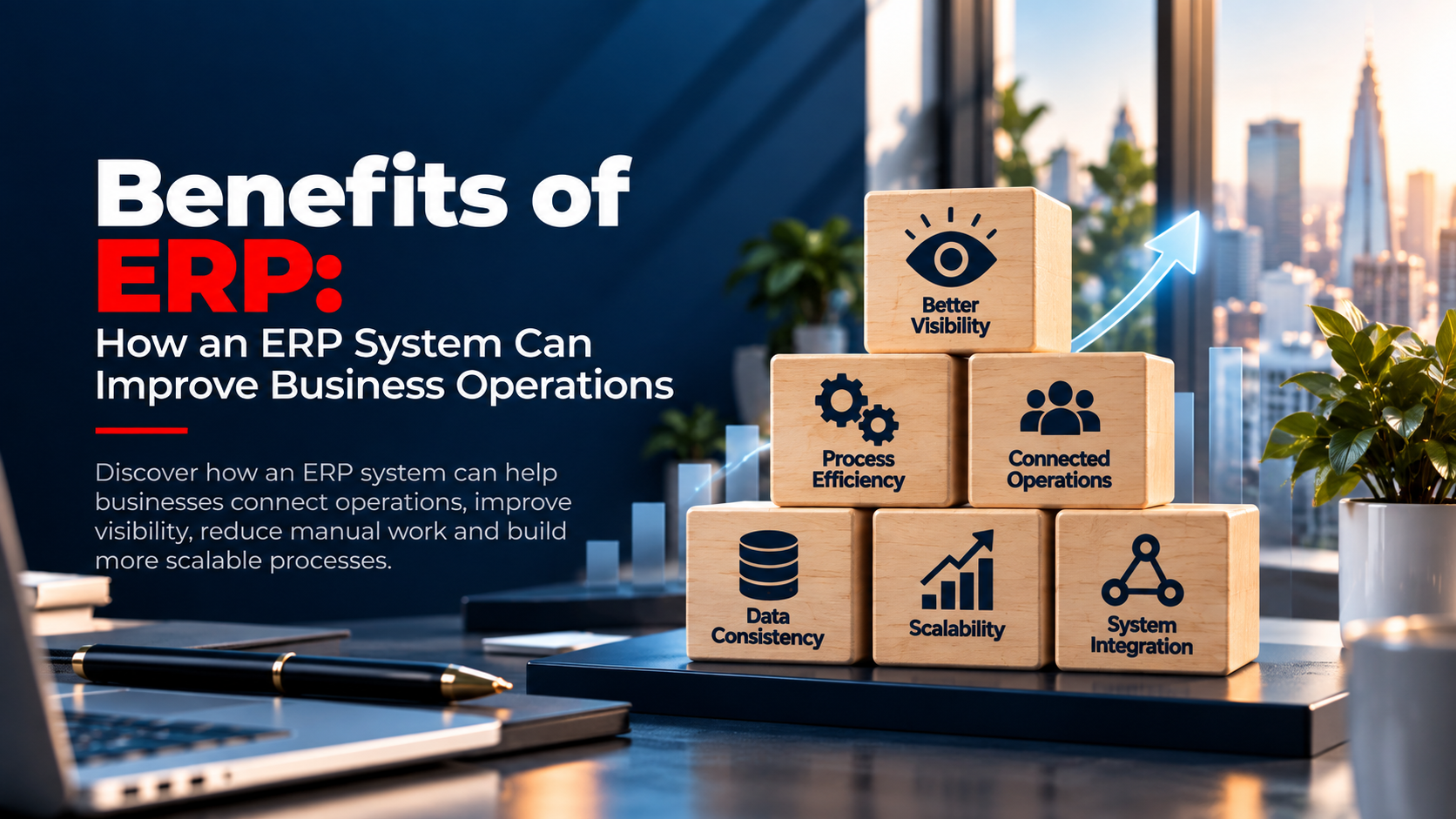
Enterprise Resource Planning systems are often associated with replacing spreadsheets or bringing several business functions into one platform. But the benefits of ERP go further than simply centralising software.
A well-designed ERP environment can help a business connect processes, improve access to information, reduce repetitive manual work and create a more consistent operational structure.
However, these benefits do not come automatically from installing an ERP. They depend on how well the system reflects the organisation's processes, data and existing technology environment.
This guide explores the main benefits of ERP and what businesses should consider when evaluating whether an ERP system could improve their operations.
What Are the Benefits of ERP?
The main benefit of ERP is the ability to connect information and processes that might otherwise be managed separately.
Sales, purchasing, inventory, production, projects, finance and other activities can generate information that needs to move across different parts of an organisation.
When these processes rely on disconnected applications, spreadsheets or repeated manual data entry, maintaining consistent information can become difficult.
An ERP can provide a shared operational environment where relevant teams work with connected processes and data.
The exact benefits will depend on the organisation, but several advantages are commonly associated with a well-implemented ERP system.
1. Better Visibility Across Business Operations
Businesses often struggle with visibility when information is distributed across multiple systems.
One team may maintain a spreadsheet while another works from a separate application or database. Management may then need to combine information manually before understanding what is happening across the organisation.
An ERP can bring relevant operational information into a more connected environment.
This can make it easier to understand areas such as orders, purchasing, inventory, production or other operational activities without repeatedly consolidating information from disconnected sources.
Better visibility can also support more useful reporting when the underlying data is structured consistently.
2. Less Repetitive Manual Work
Manual data entry can appear in many parts of a business.
Employees may copy customer information between applications, update spreadsheets, recreate documents or manually transfer information from one department to another.
ERP systems can reduce some of this repetitive work by allowing information generated in one process to support another.
Additional workflow automation and systems integration can extend this further where the ERP needs to interact with external applications.
The objective should not be to automate every task. Businesses should first identify repetitive activities that consume time or create unnecessary operational friction.
3. More Connected Business Processes
Business processes rarely operate independently.
A customer order may affect inventory. Inventory requirements may affect purchasing. Production can depend on materials being available. Operational transactions can also contribute to financial information.
When each activity is managed independently, employees may need to manually coordinate information between departments.
ERP can help create connected workflows where relevant information moves through different stages of a business process.
This can make the overall operation more consistent and reduce unnecessary handovers between disconnected tools.
4. A More Consistent Source of Business Data
Different departments sometimes maintain different versions of the same information.
Customer records, product information, supplier details or operational data may be duplicated across spreadsheets and applications.
This can make it difficult to determine which information is current.
An ERP can provide a more structured source for important business data.
However, implementing ERP does not automatically solve data-quality problems. Existing information should be reviewed, cleaned and mapped carefully during data migration.
5. Improved Reporting and Decision Support
Reporting becomes more difficult when data has to be collected manually from multiple sources.
A connected ERP environment can make operational information more accessible for reporting and analysis.
This does not mean that businesses simply need more dashboards.
Useful reporting starts by identifying the questions managers and operational teams actually need to answer.
ERP data can then support dashboards, business intelligence tools or other reporting environments designed around those requirements.
6. Better Integration Between Business Systems
Implementing an ERP does not necessarily mean replacing every application used by the organisation.
A business may have specialised software that continues to provide important functionality.
In these situations, the ERP can become part of a wider technology environment rather than the only system.
APIs and other integration methods can connect the ERP with existing applications so that information can move between systems without unnecessary manual re-entry.
A good integration strategy should clearly define which system owns each type of information and how data should flow between them.
7. More Scalable Operational Processes
Processes that work for a small organisation may become difficult to manage as transaction volumes, teams or operational complexity increase.
For example, a spreadsheet-based process may initially be manageable but become increasingly difficult to maintain when more users and information are involved.
ERP can provide a more structured foundation for processes that need to grow with the organisation.
Scalability does not simply mean adding more users. It also means designing processes, data structures and integrations that can evolve without creating unnecessary complexity.
8. Opportunities for Workflow Automation
Once processes and data are connected, businesses may identify additional opportunities for automation.
A document could trigger a workflow, information could move automatically between systems or routine actions could be initiated when specific business conditions are met.
ERP can therefore form part of a broader automation environment.
The most effective approach is usually to understand and simplify the process first, then automate the parts where automation provides practical value.
ERP Benefits Depend on Implementation
It is important to distinguish between the capabilities of ERP software and the results of an ERP implementation.
Simply purchasing or installing an ERP does not guarantee better processes.
An implementation that reproduces inefficient workflows, migrates poor-quality data or introduces unnecessary customisation can create new complexity instead of reducing it.
Businesses should therefore begin with process analysis and requirements before deciding how the ERP should be configured, customised or integrated.
User involvement, testing, training and support after go-live are also important parts of achieving long-term value from the system.
ERP vs Disconnected Business Systems
The difference between ERP and a collection of disconnected applications is not simply the number of systems involved.
A business can successfully operate with several specialised applications when those systems have clearly defined responsibilities and exchange information effectively.
Problems arise when employees become responsible for manually connecting those systems through spreadsheets, duplicate data entry and repeated reconciliation.
ERP can provide a central operational foundation while integrations connect specialised systems that still have a useful role.
For many organisations, the goal is therefore not necessarily one system for everything, but a connected technology environment.
Open-Source ERP and Business Flexibility
Businesses evaluating ERP may also consider open-source platforms such as Odoo and ERPNext.
These platforms can provide flexibility around configuration, customisation and systems integration.
That flexibility can be valuable when an organisation has specific operational requirements or needs its ERP to interact with existing applications.
However, flexibility should not lead to unnecessary development.
Standard functionality should be used where it supports the business effectively, with customisation focused on requirements that create genuine operational value.
When Should a Business Consider ERP?
ERP may be worth considering when operational complexity begins to exceed what existing systems and processes can manage effectively.
Possible signs include increasing dependence on spreadsheets, duplicated data entry, disconnected departments, limited operational visibility or significant manual effort required to produce reports.
Businesses may also consider ERP when an existing system no longer supports their processes or when they need a stronger foundation for future growth.
The decision should begin with identifying the operational problems rather than choosing a platform first.
Frequently Asked Questions About the Benefits of ERP
What is the main benefit of ERP?
One of the main benefits of ERP is connecting business processes and information within a more consistent operational environment. This can improve visibility and reduce dependence on disconnected systems and manual data transfer.
Can ERP reduce manual work?
ERP can reduce repetitive manual activities when information can move between connected processes instead of being repeatedly entered into different systems. Further automation can also be introduced through workflows and integrations.
Does ERP improve reporting?
ERP can provide more structured operational data for reporting. The quality of reporting still depends on data quality and on defining useful business metrics and information requirements.
Does ERP replace all existing business software?
Not necessarily. Specialised applications can remain in use and integrate with the ERP when replacing them would not provide sufficient business value.
Are the benefits of ERP immediate?
Not always. ERP benefits depend on factors such as implementation quality, process design, data migration, user adoption, training and continued improvement after go-live.
Considering ERP for Your Business?
The benefits of ERP come from creating better connections between processes, people, data and technology rather than simply introducing new software.
NaviTrends helps businesses analyse their operational requirements and build connected ERP environments through implementation, customisation, systems integration, data migration and workflow automation.
Businesses evaluating open-source ERP can also explore our Odoo Implementation & Customisation and ERPNext Implementation & Customisation services.